A hand grips the handle, a thumb presses the spine, and the blade gets a slow sideways flex. That is the ritual for judging a folder's strength, and it puts every eye on the pivot, the one place where the blade visibly connects to the handle. This week a r/knives user asked the obvious follow-up: if folders are weaker than fixed blades, why not simply make bigger pivots and bigger pivot tubes, and why does every discussion fixate on locks instead?
The answer, distilled from machinists and makers who have argued this out for years, is that the pivot is close to the last part of a folder that fails. The lock, the stop pin and the blade tang all give out first, and enlarging the pivot can actually subtract strength from the blade.
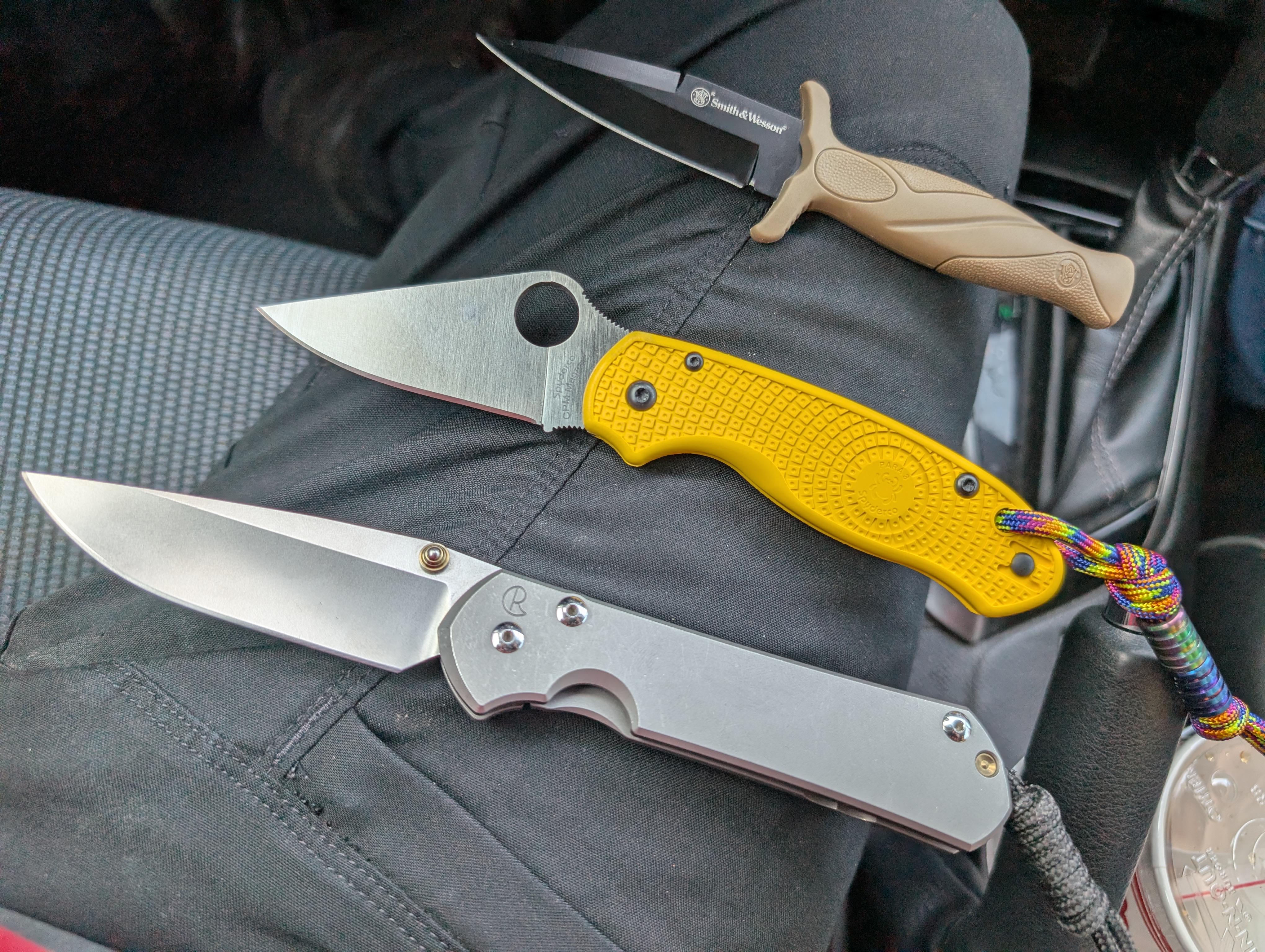
What the pivot actually carries
The numbers explain why. A 3/16-inch pivot, the standard size on countless folders, has a cross-section of roughly 17.8 square millimeters. In hardened stainless steel with a shear strength in the 400 to 500 MPa range, a single shear plane carries on the order of 800 kilograms, and a pivot in double shear doubles that. A hard sideways flex with one hand generates a few tens of kilograms at most. Even a 1/4-inch pivot, the step up for heavier users, is already far beyond what arms can deliver. Scale rarely buys safety; it buys feel.
What breaks first in real folders
BladeForums discussions of the same question converge on a consistent failure order. Locks fail first, usually by disengaging rather than by shearing. Then come the fasteners holding the frames together, then the stop pin, which on most knives is smaller in diameter than the pivot and sits behind it absorbing every opening and closing impact. Only after all of that does the pivot itself enter the picture. When folders fail catastrophically, the community's verdict is that it is almost always at the lock.
Two pieces of context sharpen the point. Large decorative pivot caps on handles often hide a much thinner actual barrel, so visual size misleads. And makers who do want heavy-duty pivots, in the 1/4-inch-and-up class, pay for precision-ground hardware, because folder tolerances leave no room for the plus or minus five thousandths of nominal pin stock.
The catch: a bigger hole can weaken the blade
The reason the industry does not simply scale up is geometry. The blade tang near the pivot hole carries the highest bending load in the whole knife, and drilling a bigger hole removes material exactly there. The cross-section that resists bending is the tang width minus the hole diameter, times the blade thickness, so a bigger pivot demands thicker stock to break even, which adds weight and steals closed-length room from the handle. Overbuilt knives like Striders do run large pivots, but they thicken the blade stock to match, and the pivot cap is doing marketing work as much as mechanical work. The most critical faction goes further: custom maker Jay Fisher has long argued that any folder is structurally compromised by design, calling the pivot a less than quarter-inch piece of steel asked to transfer forces a fixed blade spreads across a full tang. His conclusion is to carry fixed blades; the community's softer conclusion, backed by decades of broken-knife reports, is that a quality folder fails at its lock long before its pivot, and that no realistic hand load changes that.
Next time a folder is open on the bench, look an inch behind the pivot. The stop pin sitting there is smaller than the pivot, takes every opening snap, and almost nobody talks about it.