Wayne Walker is a full-time maker now, with knives reaching dealer shelves and collections, but the path there took three decades. In a shop talk interview with KnifeNews, Walker traced his start to a neighbor who was in his nineties and still grinding blades from scrap steel, using deer antler for handle slabs and reshaped saw blades for cutting edges. Walker was 12. He watched, then started making crude knives of his own.
A Long Hobby Before a Career
For most of his adult life, knifemaking stayed a side pursuit. Walker made knives off and on, selling occasionally, learning by trial and error rather than through a formal apprenticeship. That path is easy to overlook in an era when new makers document every step on Instagram, but it remains the norm: for every name that breaks through, there are dozens of part-time craftsmen working with whatever tools they have.
His first sale set the tone for the early years. “My first one sold for $10 on eBay and $8 of that was to ship it,” Walker told KnifeNews. Prices like that are hard to square with his current work, which sells through dealers and collectors, but they are also a reminder that reputation is built one knife and one customer at a time.
The turning point came in 2021, when Walker upgraded his equipment, set up a dedicated workshop and moved to full-time production. He has since relocated to Alabama and now runs the business with his family involved: his wife handles material sourcing, marketing and outreach to female customers, while his 14-year-old son has started making sheaths.
The Hamon as a Signature
Walker's knives share a recognizable design language: flowing lines, comfortable handles and, most consistently, hamon lines. A hamon is the visible boundary left on a blade by a differential heat treatment, where clay applied to the spine slows cooling so the edge hardens while the spine stays soft. The result is a blade that holds a keen edge but resists breaking, and a visual pattern that no two makers execute identically.
“Hamon lines are probably my favorite to work with. Every one of them is different and it’s almost like a distinct signature that you can create inside the steel.”
That combination of function and identity is what separates a maker's work from a catalog knife. A hamon is not decoration applied after the fact; it is a record of how the blade was heat treated, which means every visible line is also a statement about performance.
Practicality First
Walker describes his design priorities in unglamorous terms. He focuses on making lines flow, keeping the knife ergonomic and ensuring it can be used for long periods without fatigue. Aesthetics follow from that rather than leading it, which is a different order of operations from the collector-driven segment of the market where unusual shapes and exotic materials often come first.
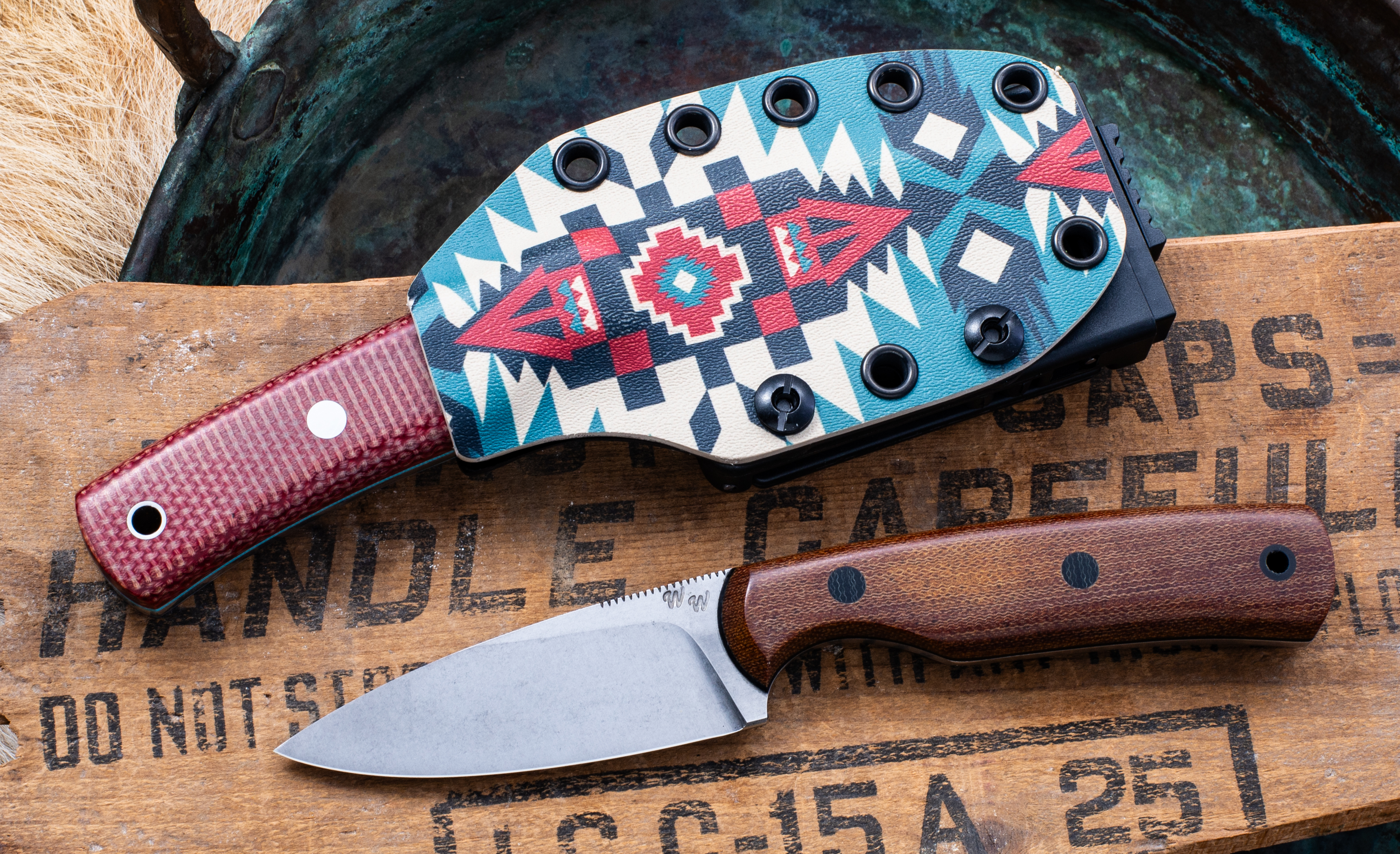
His featured knives, the Wanderer in drop point and tanto form, reflect that approach: straightforward profiles, comfortable handles and clean grinds, with the hamon providing the visual signature instead of a flashy handle material. It is the kind of knife that looks plain in a photograph and considerably better in the hand.
What Comes Next
For the rest of 2026 and into 2027, Walker says his goal is scale rather than reinvention: getting his work into as many hands as possible. That means more dealer relationships, more consistent output and the slow process of building a name outside the circles that already know it. He also says his style continues to change, and that buyers should expect new directions rather than a fixed catalog.
The bigger shift may be generational. Teaching his son to make sheaths is how most custom knife businesses actually survive, and it is a more meaningful signal about the shop's future than any single release.
The Verdict
Walker's story is a useful counterweight to the idea that knife making is a fast route to a brand. Fifteen years of occasional sales, a $10 first knife and a workshop built in stages produced a maker with a genuine technical signature rather than a marketing one. For buyers, the practical takeaway is that hamon-equipped customs from a maker at this stage of his career still sit in the accessible range, though that window tends to close as dealer representation grows.
Walker's knives are available through his direct channels and a growing list of dealers. There is no announced release date for his next model.