Small knives are having a moment, and Real Steel's ESCA Boost is one of the more deliberate entries in the category. The Boost takes the company's original ESCA — already a pocket-sized crossbar folder — and rebuilds it with G10 scales, an upgraded 140Cr blade and hardware details that would not look out of place on a knife twice the price. The result weighs 49 grams. For reference, that is less than two AA batteries, and roughly half the weight of a typical aluminum-handled EDC folder.
Real Steel published the model on August 14, 2026, in ten colorways at $59 each. All ten currently show as sold out on the brand's own store, which says something about how the small-knife segment is moving right now.
A Fifth-Pocket Knife With Real Hardware
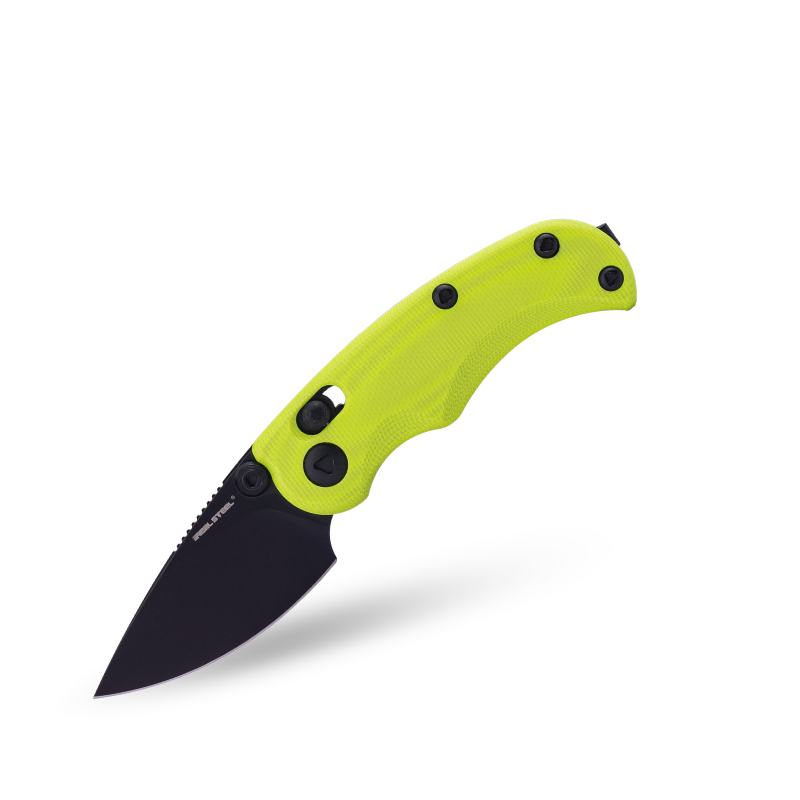
The Boost is designed by Poltergeist Works, the Polish studio also responsible for the Delta 2600, and it carries the same architectural restraint. The handle is a single G10 shell with a gentle palm swell and a short, squared-off butt. At 2.04 inches, the blade is short enough to be unremarkable in most jurisdictions that restrict carry length, and the overall package is meant to sit in a coin pocket or a shirt pocket rather than clip to a waistband.
The lock is the interesting part. The crossbar is symmetrical, which means the same spring-loaded bar engages a ramp on the blade tang regardless of which side you press. That makes the Boost genuinely usable in either hand, which is rarer than the marketing language suggests: plenty of folders called ambidextrous only have a movable clip.
Real Steel also specifies triangular-drive screws throughout. That is a small choice with two consequences: the hardware looks unified rather than assembled from a parts bin, and owners will need a dedicated bit rather than the hex key already in their drawer. Whether that counts as refinement or friction depends on how often you take your knives apart.
Specifications
| Spec | Detail |
|---|---|
| Blade steel | 140Cr stainless |
| Handle material | G10 (Micarta and carbon fiber variants also offered) |
| Overall length | Not disclosed |
| Blade length | 2.04 in |
| Blade thickness | Not disclosed |
| Weight | 1.73 oz / 49 g |
| Lock type | Symmetrical crossbar lock |
| Designer | Poltergeist Works |
| Price (MSRP) | $59 |
| Status | Listed August 14, 2026; sold out on realsteelknives.com |
What 140Cr Means at This Price
Real Steel positions 140Cr as the upgrade over the steel used in the original ESCA, citing better edge performance and durability. It is a Chinese-produced stainless rather than one of the American powder-metallurgy grades that dominate enthusiast discussion, and the company does not publish a hardness range for the Boost. That is worth being honest about: at $59, buyers are getting a steel chosen for manufacturability and corrosion resistance rather than maximum wear resistance.
For the work this knife is built for — opening mail, cutting tape, trimming loose threads, breaking down a small box — that is a sensible trade. A 2.04-inch blade does not accumulate the kind of edge wear that makes vanadium content meaningful, and a steel that sharpens quickly on a ceramic rod is more useful in daily life than one that holds an edge for months but needs diamond plates to restore it.
The G10 handle is the bigger upgrade over the original ESCA. G10 is a glass-reinforced epoxy laminate: dimensionally stable, effectively immune to moisture, and textured enough to stay put in a sweaty hand. On a knife that is mostly handle by volume, the material choice matters more than the blade steel, and it is the main reason the Boost feels like a different class of object than its predecessor.
Ten Colorways, One Design
The color program is unusually broad for a $59 knife: Venom Green, Violet Reaper, red and natural Micarta, two carbon fiber builds, and four G10 variants in blaze, pink, blue and natural. Real Steel is treating the Boost as a fashion object as much as a tool, which is consistent with where the small-knife market has gone.
The risk of a ten-color program is dilution: some finishes will look sharper than others, and the louder options tend to age faster in visual terms than the muted ones. The natural G10 and Micarta versions are the safest long-term picks.
Where It Lands
At $59 the ESCA Boost competes with the small end of the Civivi and Kizer catalogs and with keychain-adjacent tools that are not really knives. Its closest conceptual rival is the original ESCA, which remains cheaper and lighter but less refined. Anyone who has carried a tiny crossbar folder and wished it felt less like a novelty will understand the pitch immediately.
The obvious limitation is capability. A 2.04-inch blade is not a camping knife, and 49 grams of G10 will not survive being used as a pry bar. Buyers who want one knife for everything should look elsewhere; buyers who want a knife they will actually carry should not.
The Verdict
The ESCA Boost is a well-judged refresh: the same compact footprint, better materials, a genuinely ambidextrous lock, and a price that stays under $60. Real Steel has not tried to turn a pocket knife into a tactical tool, and the model is better for it.
All ten colorways are currently out of stock at realsteelknives.com. Given the breadth of the lineup, restocks are likely to arrive in waves rather than all at once, so specific finishes may take longer than others to return.