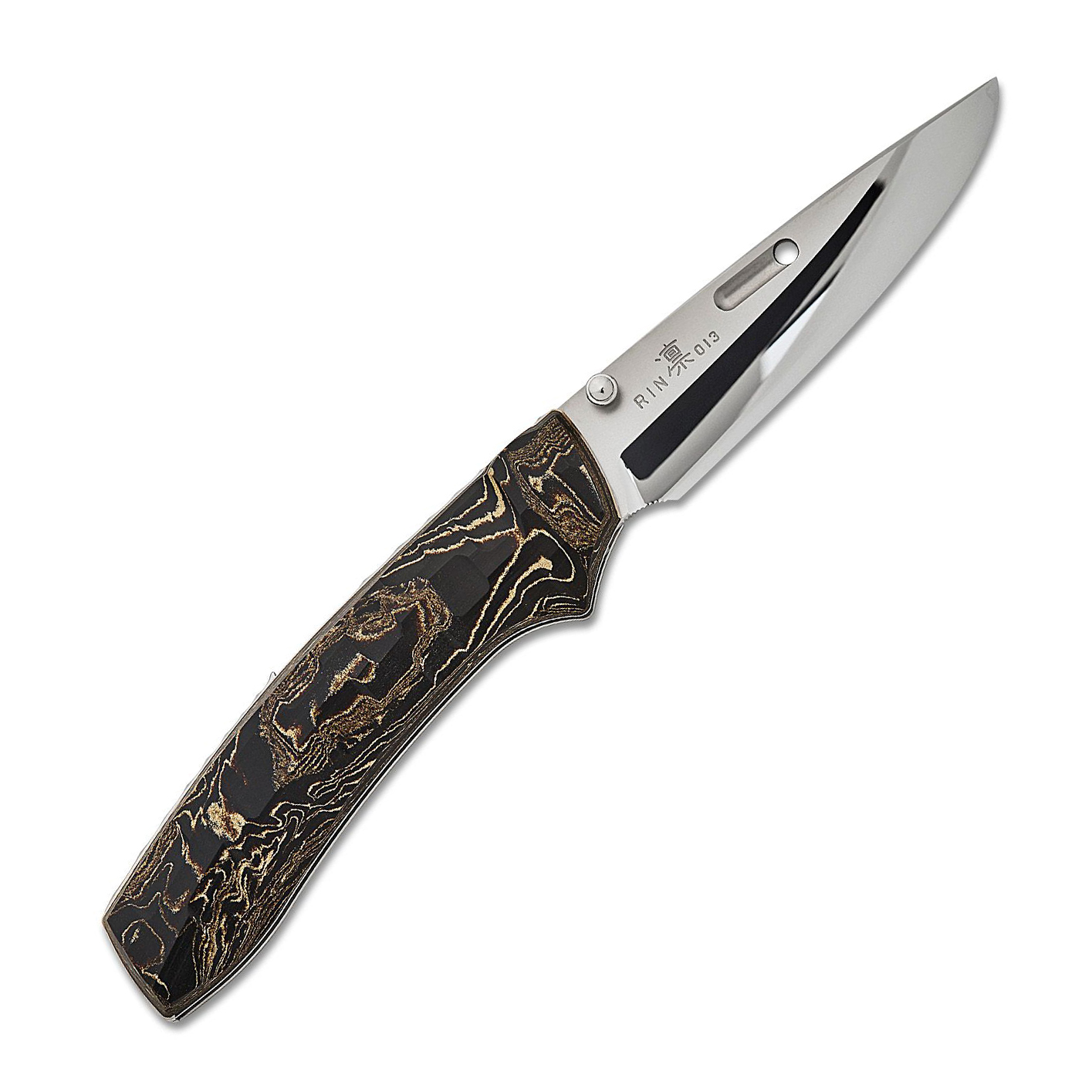
The Rockstead RIN is a high-end Japanese folding knife that has become a legend among collectors and EDC enthusiasts. Featuring a ZDP-189 stainless steel blade, a mirror-polished convex grind, and a NAGURI-inspired Ebonite handle, the RIN is as much a piece of art as it is a cutting tool.
But is it truly worth the investment? In this review, we break down the RIN’s specs, features, and craftsmanship, helping you decide whether this premium knife belongs in your collection.
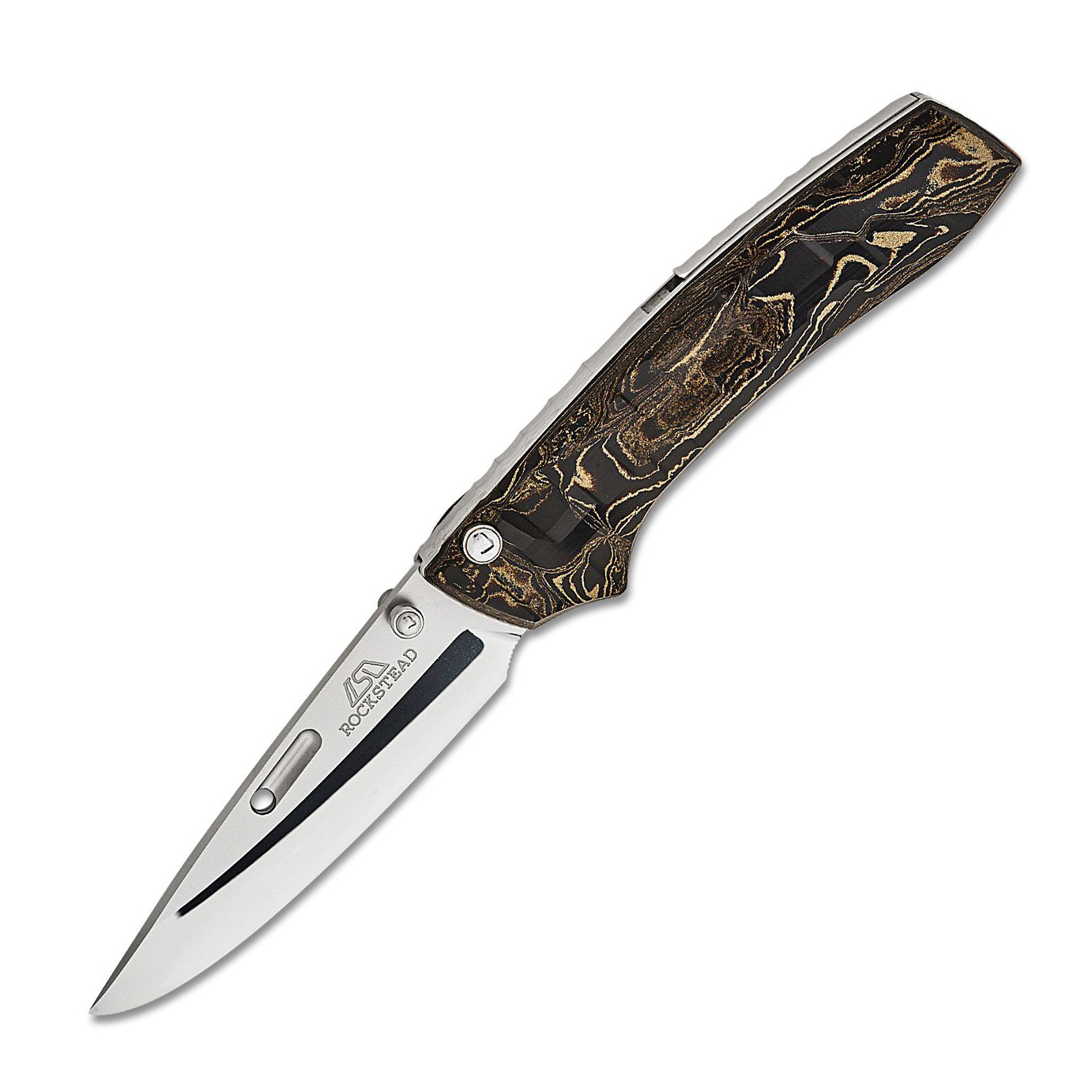
Rockstead RIN Specifications
Feature | Detail |
|---|---|
Blade Length | 3.35 in (85 mm) |
Closed Length | 4.15 in (105 mm) |
Overall Length | 7.50 in (190 mm) |
Blade Thickness | 0.125 in (3.2 mm) |
Blade Steel | ZDP-189 Stainless Steel |
Hardness | Approx. 67 HRC |
Blade Style | Drop Point (Waterdrop) |
Grind | Convex Grind |
Blade Finish | Mirror Polish |
Lock Type | |
Handle Material | Beige Ebonite (Hard Rubber) |
Liner Material | |
Pocket Clip | Concealed Titanium Clip (Right/Left Carry) |
Weight | 3.60 oz (102 g) |
Made In | Japan |
Key Features
1. ZDP-189 Blade with Convex Grind
The ZDP-189 blade reaches approximately 67 HRC, providing extreme edge retention and exceptional slicing performance. The convex grind enhances cutting efficiency, while the mirror-polished finish reduces friction and elevates aesthetics.
2. NAGURI-Inspired Ebonite Handle
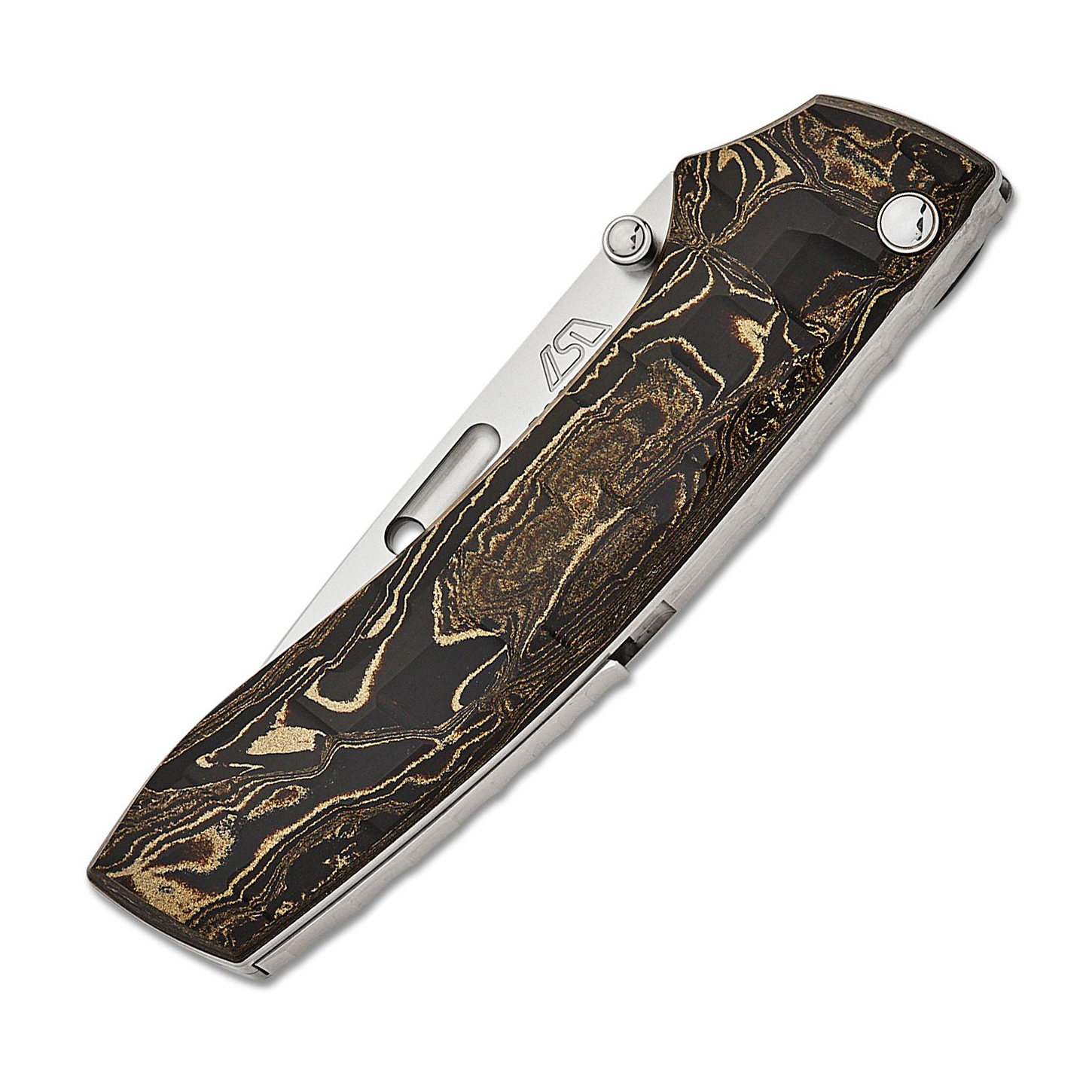
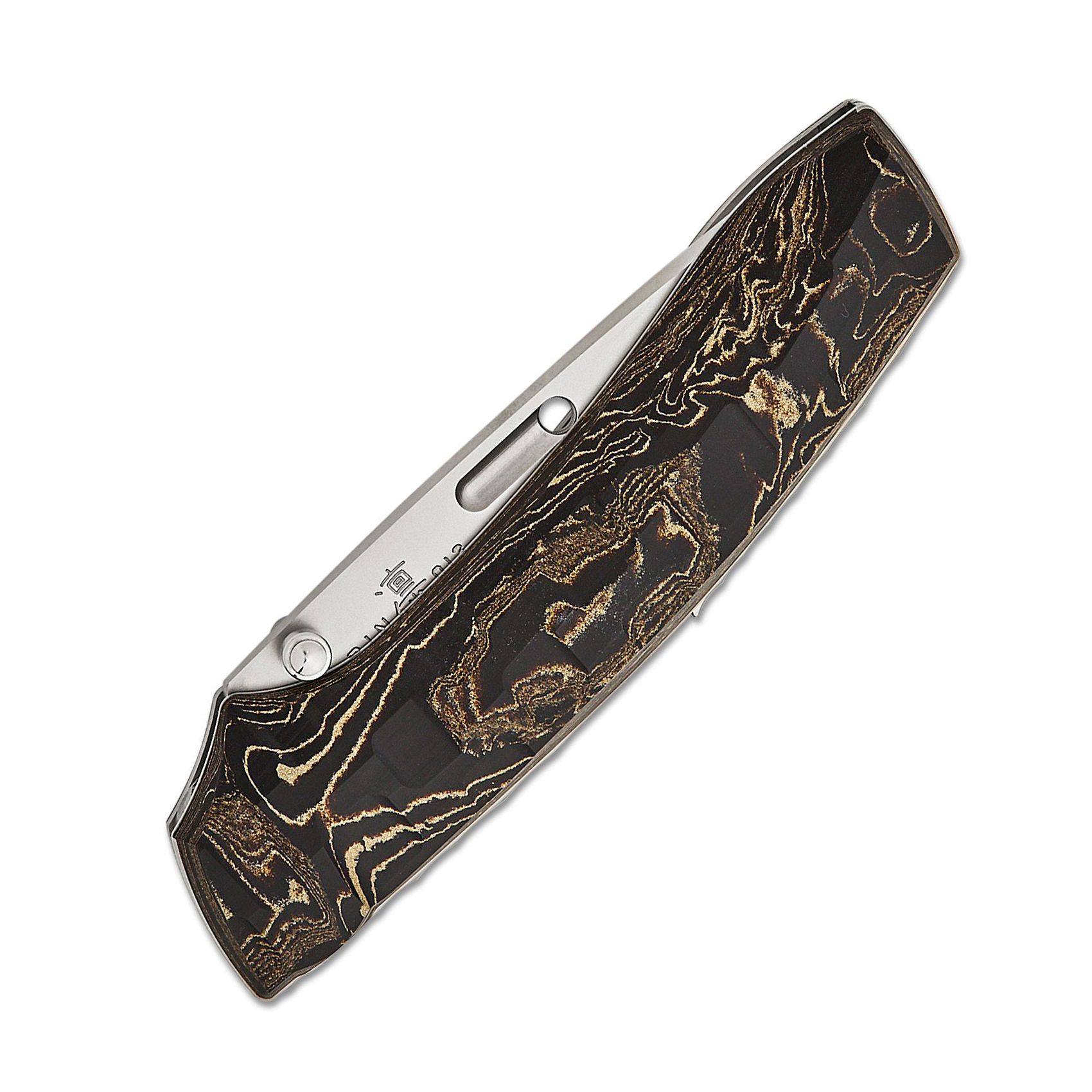
The handle draws inspiration from NAGURI, a traditional Japanese woodworking technique. The textured surface improves grip and reflects Japanese architectural elegance. Ebonite, or hard rubber, adds durability and warmth, giving the RIN a unique tactile feel.
3. Concealed Titanium Clip System
Rockstead’s innovative concealed clip allows the knife to be carried comfortably without interfering with grip. Licensed through a U.S. patent, this clip system ensures both ergonomics and legal compliance.
4. Button Lock Mechanism
The button lock provides smooth, secure blade deployment and retraction, complementing the knife’s minimalist and ergonomic design.
5. Lightweight Titanium Construction
Titanium liners and hardware keep the RIN at 102 g, making it ideal for EDC without sacrificing durability.
Performance and Durability
Edge Retention: The ZDP-189 blade can remain razor-sharp for 2–3 years with proper care.
Everyday Use: Smooth deployment, comfortable grip, and lightweight design make it suitable for premium EDC.
Precision Cutting: Convex grind and mirror polish ensure efficient slicing for food prep or detailed tasks.
Pros and Cons
Pros:
Extreme edge retention (ZDP-189, 67 HRC)
Mirror-polished convex blade for performance and aesthetics
NAGURI-inspired Ebonite handle with superior grip
Concealed titanium clip for ergonomic carry
Lightweight, durable titanium construction
Cons:
High price point, reflecting premium craftsmanship
Mirror-polished finish requires careful maintenance to avoid scratches
Not intended for heavy-duty survival use
Who Should Buy Rockstead RIN?
Collectors: The RIN is a display-worthy folding knife with artistic and cultural significance.
EDC Enthusiasts: Lightweight, ergonomic, and extremely sharp for everyday carry.
Culinary Users: Precision slicing thanks to convex mirror-polished edge.
Conclusion: Is the Rockstead RIN Worth It?
Absolutely—if you value premium Japanese craftsmanship, extreme edge retention, and collectible design. The RIN is more than a tool; it is a fusion of modern engineering and traditional Japanese artistry.
For those seeking a high-end folding knife that combines performance, elegance, and cultural heritage, the Rockstead RIN is a top-tier choice.
FAQ
Q1: How often does the RIN need sharpening?
With normal use, the ZDP-189 blade can maintain its edge for 2–3 years.
Q2: Is the RIN suitable for daily carry?
Yes, the lightweight titanium construction, ergonomic handle, and concealed clip make it excellent for EDC.
Q3: How does the NAGURI handle affect grip?
The textured handle provides a secure and comfortable grip, while adding aesthetic value inspired by Japanese architecture.