A visitor at the 2026 Beijing International Knife Show was promised two very different things in the same hall: a close look at the masterworks of world-class bladesmiths, and an immersive walk through the evolution from modern tactical tools to traditional ethnic knives. The organizers called it a cultural resonance between "blade" and "human" across time.
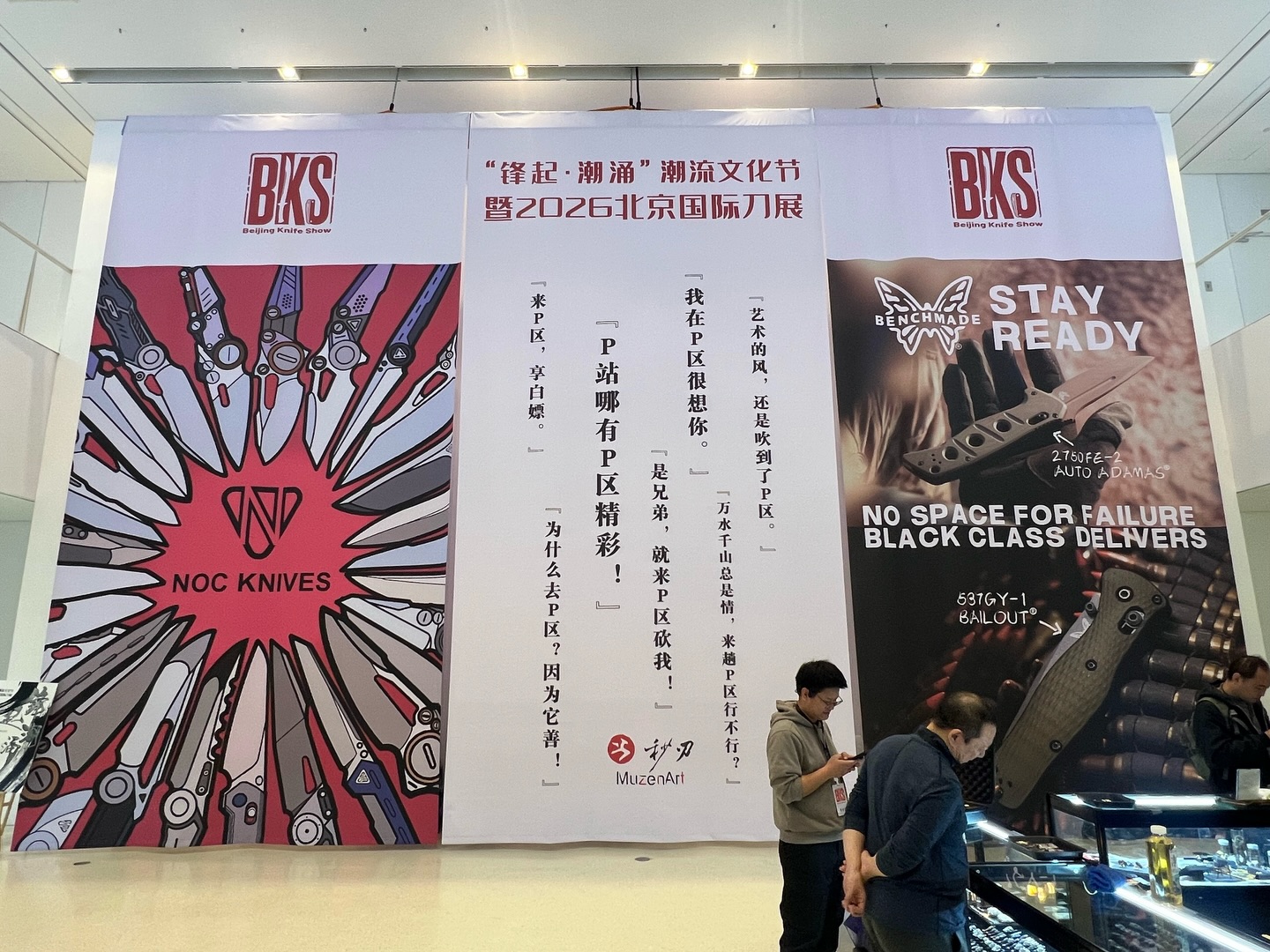
That is a wider curatorial span than a normal knife show attempts. A tactical folder and an ethnic working blade belong to different design traditions, different users and different kinds of value. Putting them on one path asks the visitor to read both as expressions of craftsmanship rather than as competing products. It also fits the show's lifestyle framing, where an object is worth attention because of what it says about the person who carries or collects it.
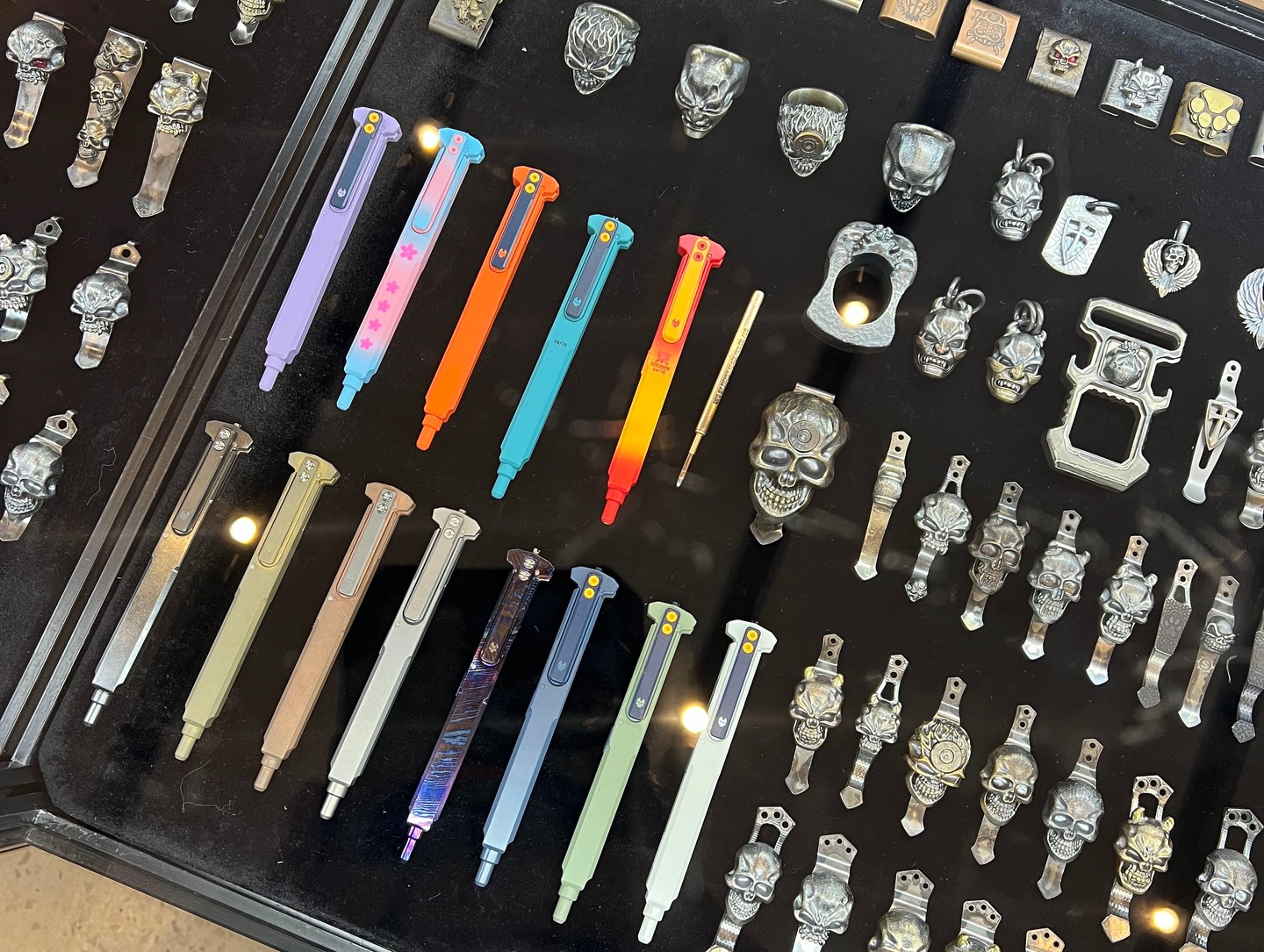
Surrounding categories reinforce the reading. EDC gear, outdoor equipment, artisanal accessories, specimen fossils, specialty coffee, handcrafted leather and designer toys sat alongside the knives. A display of handcrafted silver accessories and EDC pens photographed at the show makes the point quietly: the exhibition was about objects with a maker's hand in them, not only about edges.
China's 2026 calendar makes the contrast sharper. Half a year later, the 最刀剑 (Ultimate Blades Show) program at the Silk Road International Art Exchange Center in Langfang staged contemporary art knives as sculpture, with works like a Norse serpent in hand-forged damascus and an 83-centimeter spirit-beast blade, alongside a historical section of 200-plus ancient arms. Beijing in January went broad and social; Langfang in the summer went curated and art-historical. Both used the same word, culture, but built different rooms around it.
Civic duty was the show's other half. An on-site anti-fraud public welfare zone, organized with the Pingfang Police Station of Chaoyang District, sat in the same announcement as the bladesmith masterworks. A program that ranges from tactical tools to ethnic blades and from designer toys to police-led quizzes is not trying to be a pure trade event.
The "blade and human" phrasing is more than decoration in a show that also sells coffee and leather goods. It proposes that the object's meaning comes from the person who made or carried it, which is a curatorial claim rather than a product claim. That is why a tactical folder and an ethnic working blade can share a path through the same exhibition without one being treated as an upgrade of the other. The organizers did not publish a catalogue or an attendance figure afterward, so the exact scope of that path is not on the record.
The comparison with Langfang is not a ranking. Beijing's January event aimed at breadth, pulling in lifestyle categories and a public-welfare program alongside the blades. The summer art fair aimed at depth, staging a smaller number of works in museum conditions over a much longer run. Both were described as cultural events rather than markets, and both used the same language about craftsmanship and self-expression. A Chinese knife show calendar that can hold two such different formats in one year is itself the more interesting development.
The event ran January 16 to 18 at the Damei Center Art Center, 10:00 to 18:00 daily with VIP entry at 09:00. No post-event catalogue or attendance figure has been published, so the exact list of bladesmiths and ethnic knives shown is not on the record. What survives is the organizers' phrasing, and the range it proposed: a blade in the hand, a maker behind it, and a longer history than any single show can hold.