Seven new members were welcomed into the BLADE Magazine Cutlery Hall of Fame at a Saturday breakfast during BLADE Show 2026. It is a small number with a long shadow: the induction is one of the few moments in the weekend where the industry stops selling and formally records who shaped it.
That ceremony sat at one end of a program that had almost nothing to do with browsing tables. At the other end was BladeSports International's annual World Championship Cutting Competition, a physical contest where competitors work through standardized cutting courses, and Blade HQ's Balicomp 2026, the balisong flipping competition. One tests a blade under load, the other tests a handler's dexterity with a blade. Both draw crowds that would not form around a display case.
BLADE Magazine's recap of the 45th edition lists the full run: the Knife of the Year and Custom Knife awards, the Hall of Fame breakfast, BLADE University classes, the cutting championship, Balicomp, and meetings of the American Bladesmith Society and the Knifemakers' Guild. Knifemakers and companies from around the world displayed work, and a good share of both organizations' members were in one place for the weekend.
Two kinds of gathering
The competitions and the guild meetings serve opposite functions, and a large show needs both. A cutting championship or a flipping contest is public, legible to a general admission ticket holder and easy to watch without specialist knowledge. An ABS meeting or a Guild gathering is private in the sense that its value is to the people in the room: standards, membership, the technical concerns of a craft. The first fills the hall; the second keeps the trade organized.
The Hall of Fame breakfast sits between them. It is a ticketed ceremony with limited seating, but its results become public record. BLADE's coverage notes that the new members had not been determined at press time in some of its previews, which is a reminder that the induction is decided on its own timeline rather than fitted to the show's marketing calendar.
Why the program holds the weekend together
A three-day show with more than 1,000 exhibitors cannot rely on the floor alone. Classes start before the hall opens, competitions run on a schedule, ceremonies occupy mornings, and the Pit at the Renaissance Atlanta Waverly carries the evening. The 2026 edition managed all of it while nearly half the Cobb Convention Center was under renovation, with completion targeted before the 2027 show.
None of these events require specialist knowledge to watch, which is part of their value to a general admission audience. A cutting competition is legible in seconds; a flipping contest needs no explanation; a hall of fame breakfast, by contrast, assumes you know the names. Programming that spans both kinds of visitor is harder to assemble than a schedule of vendor demonstrations, and it is one reason the Atlanta show draws people who are not primarily buyers. The 2026 edition ran all of it inside a building site.
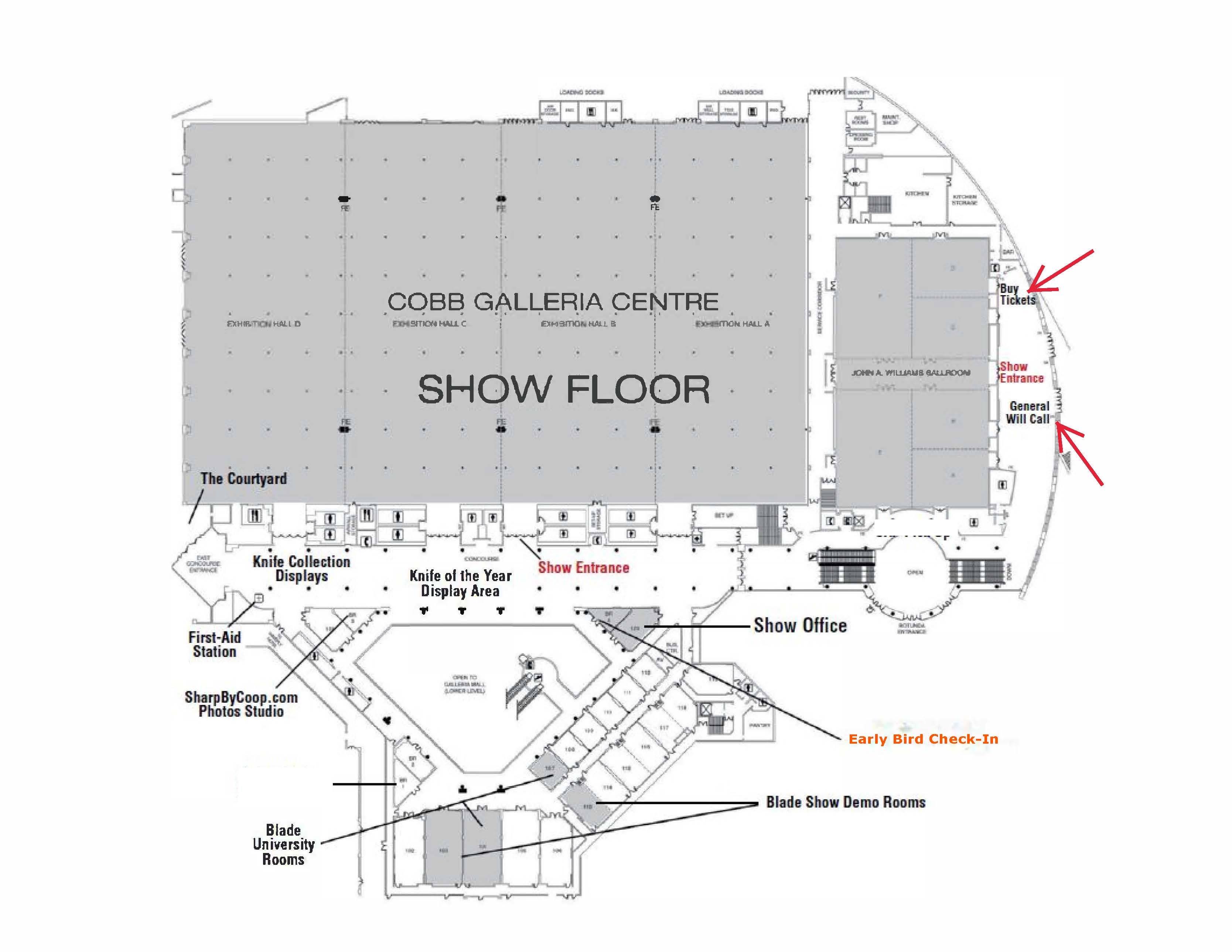
For an attendee, the practical conclusion is simple. General admission ran 11 a.m. to 6 p.m. Friday, 9 a.m. to 6 p.m. Saturday and 9 a.m. to 2 p.m. Sunday, with early bird entry at 10 a.m. Friday. The program outside those hours is not filler. It is half the reason the show has lasted 45 years.