$74 is the number that matters, and so is 3.72 ounces. CIVIVI's WoodPal is the smallest of three bushcraft fixed blades the company ships on November 24, and the one that lands closest to impulse territory.
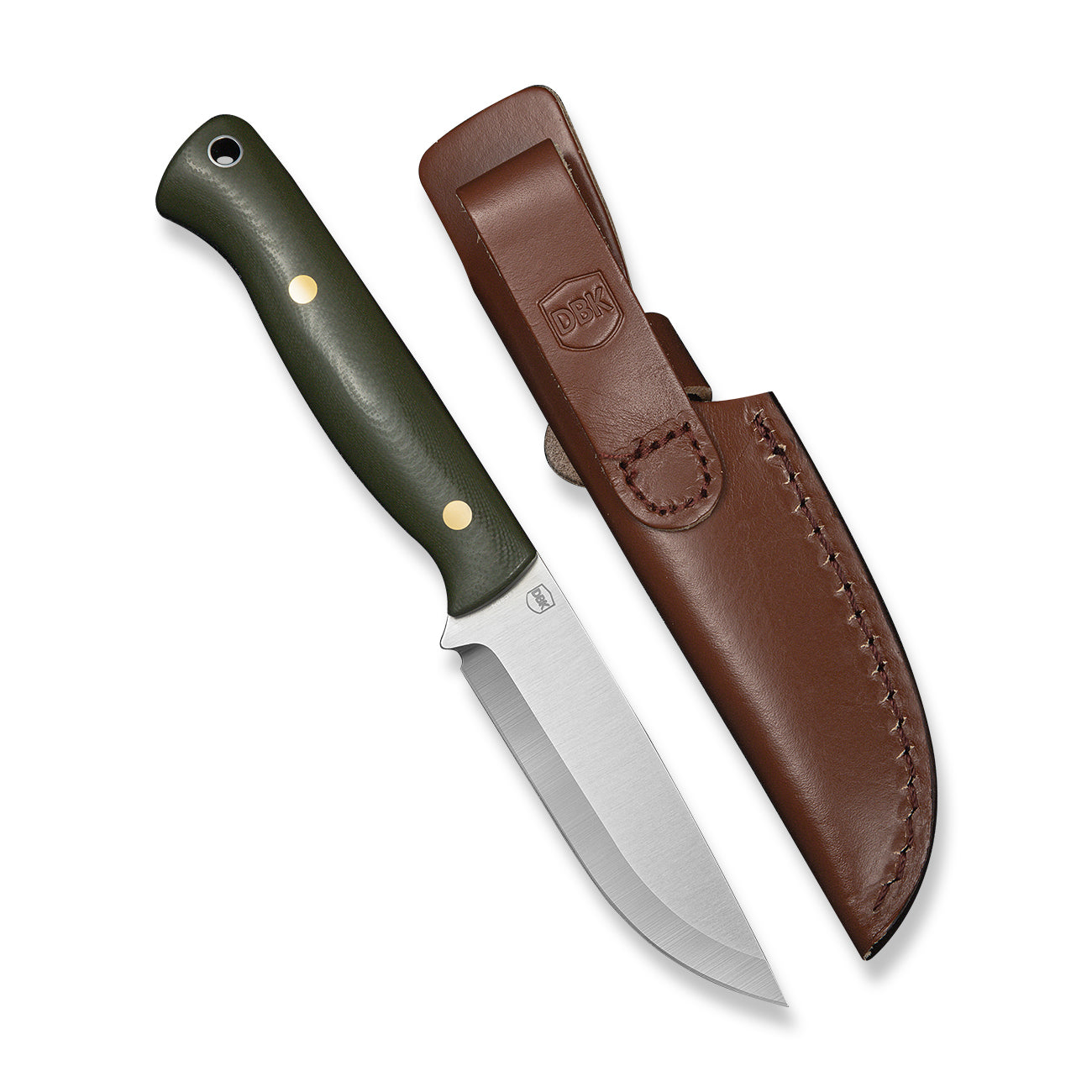
It is also the second production knife from Maarten and Mikkie B., the pair behind the Dutch Bushcraft Survival channel. Their first factory collaboration was the Böker Bushfriend 2000, a 9.06-inch Solingen build with a 4.33-inch blade in 80CrV2, a 5.64-ounce carry weight and a $259 price at Böker USA. The WoodPal keeps the family resemblance and drops everything else: 7.38 inches overall, a 3.44-inch blade, 3.72 ounces, $74.
What carried over from the Bushfriend
The handle is where the lineage shows. DBK's knives have always been shaped around carving grips rather than tactical stances, and the WoodPal runs 3.94 inches of curved G10 at 0.72 inches thick, with a palm swell that falls away toward the front. Nothing But Knives compared the curve to Becker and Bark River handles when it covered the launch on November 5, and that is a fair read of the silhouette.
"This is one of Civivi's first ever scandi grind knives (along with the Thaloryn). The Wood Pal is a simple design that feels thematically partnered to their previous design with Boker, the Bushfriend 2000."
Andrew North, Nothing But Knives, November 5, 2026
What did not carry over is the steel bill. The Bushfriend runs 80CrV2 or, in its 121005 variant, 14C28N at 3.7 mm stock and 153 grams from the Solingen workshop. The WoodPal builds the same idea in China at 3 mm.
14C28N at 59 HRC, ground scandi
Sandvik 14C28N is the nitrogen-bearing stainless CIVIVI has leaned on for most of its budget line, and it is a defensible choice on a knife meant to be maintained at a camp table. The carbide structure is fine, corrosion resistance is high enough that a wet leather sheath will not ruin an edge overnight, and it responds to a ceramic rod and a strop without diamond plates. CIVIVI lists the hardness at HRC 59 plus or minus one, which is soft enough to avoid chipping on knotty pine and hard enough to hold a working edge through an afternoon of feather sticks.
The grind is the more consequential decision. A scandi bevel runs from the edge to a single shoulder with no secondary bevel, which makes the knife behave like a chisel when you are carving a try stick and like a wedge when you split kindling. At 0.12 inches of stock there is not much wedge to work with, so expect the WoodPal to carve well and baton modestly. Buyers who want a splitter should look at the 4 mm spine on the Thaloryn instead.
| Spec | CIVIVI WoodPal C25075A-1 |
|---|---|
| Overall length | 7.38 in / 187.4 mm |
| Blade length | 3.44 in / 87.4 mm |
| Cutting edge | 3.17 in / 80.5 mm |
| Blade stock | 0.12 in / 3 mm |
| Steel | 14C28N, HRC 59 ±1 |
| Grind | Scandi, satin finish |
| Handle | G10, 3.94 in, 0.72 in thick |
| Weight | 3.72 oz / 105.5 g |
| Sheath | Brown leather, black paracord lanyard |
| Price | $74, pre-order, ships November 24 |
Brass pins, no screws, straight-drop sheath
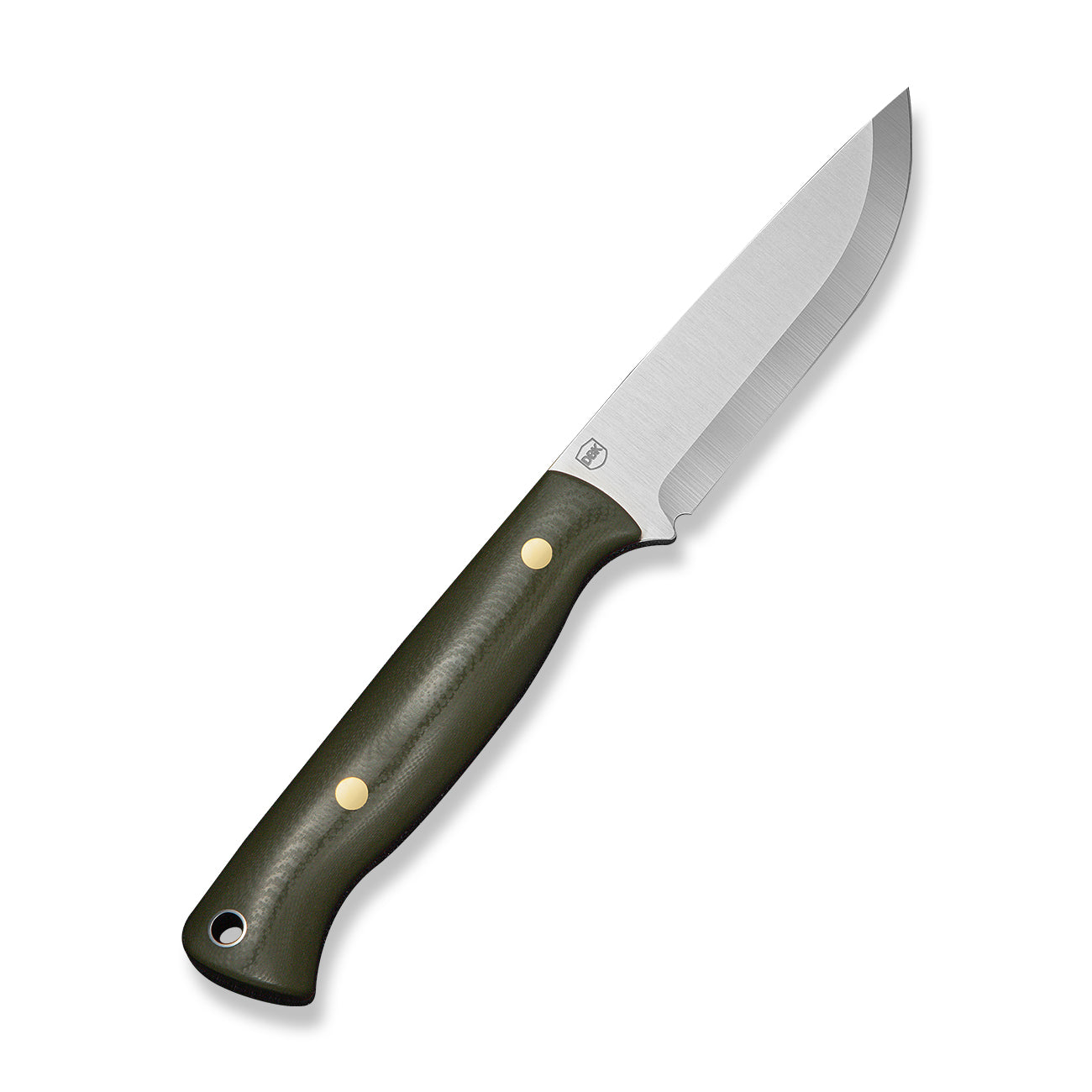
CIVIVI pinned the scales instead of screwing them, with brass pins and stainless tubes holding green and burgundy G10 in this SKU. The other liner combinations in the run are green with red, brown with white, and black with burgundy. Pinned scales close the door on swapping handles later, which is the honest cost of the decision, but they also remove four screws that could back out in a pack.
The sheath is brown leather with a straight back loop rather than the drop-carry hanger CIVIVI put on the larger Farrow. That matters more than it sounds: a straight loop rides higher on a belt, which keeps the handle clear of a pack hip belt when you are bent over a fire pit. A black paracord lanyard comes tied on from the factory.
Pre-orders are open at $74, with CIVIVI quoting November 24 as the ship date. That puts it $38 under the Farrow and $8 under the Thaloryn, and it is the only one of the three that fits a 3.5-inch blade limit without argument.
Of the 3.44 inches on the spec sheet, 3.17 inches are sharpened. The remaining 0.27 inches is a short ricasso behind the plunge, small enough that the edge nearly reaches the scales when the knife is choked up for detail work.