The first cut most pocket knives make is through the tape on a shipping box, one-handed, with the box pinned against a knee. A harpoon blade meets that cut at a different angle than a drop point, and that small difference is the argument CIVIVI is making with the Ryson-E.
Priced at $69.40, it reads like a working knife rather than a collectible. The materials back that up: 14C28N at 57 to 59 HRC, G10 scales, steel liners, a caged ceramic bearing pivot. Nothing here is exotic, and everything here can be replaced or re-sharpened without a specialist.
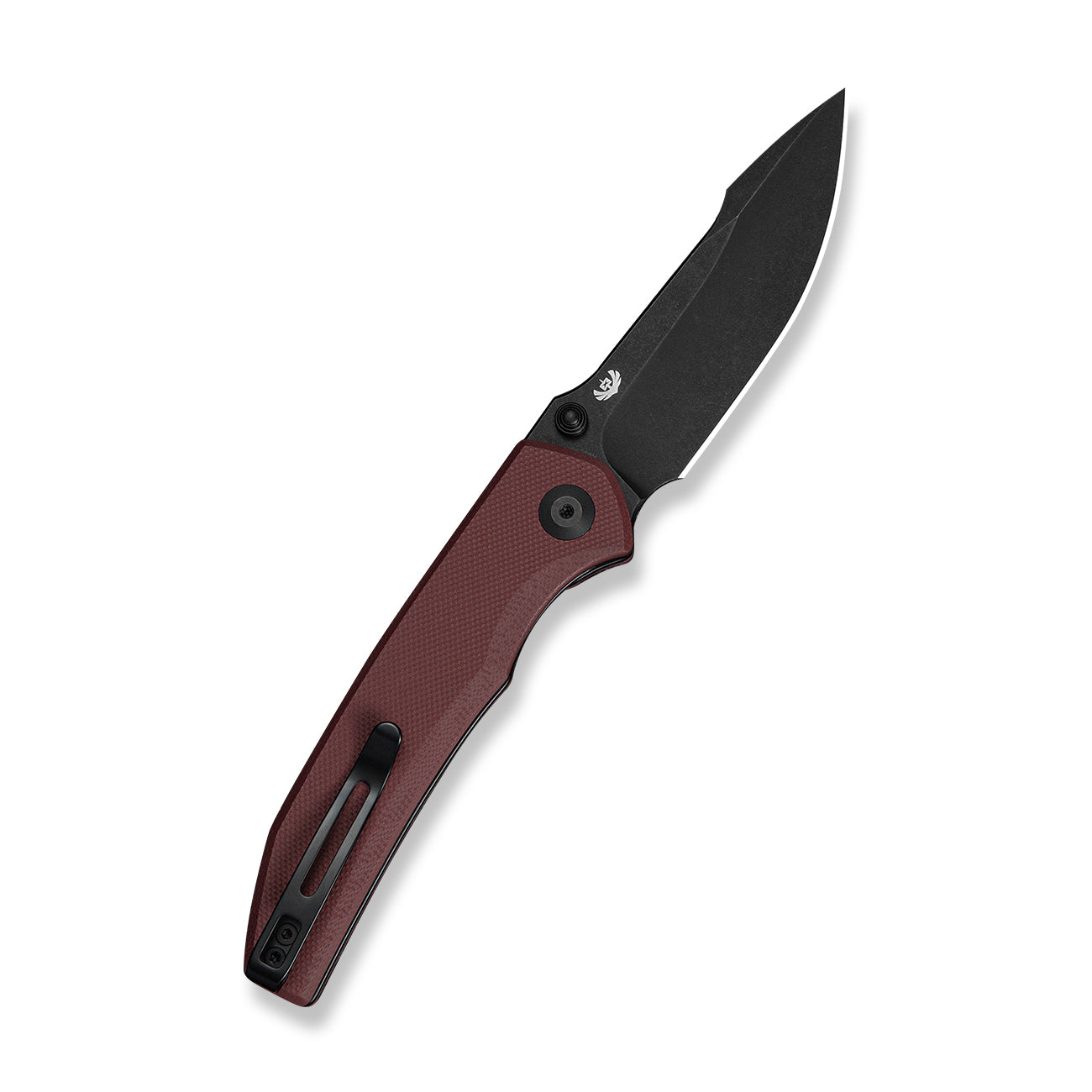
A Harpoon That Earns Its Shape
Three point three two inches of 14C28N, hollow ground on 3 mm stock. That pairing produces a thin edge shoulder and a very fine apex, so rope, cardboard and fruit give way with almost no resistance. It also means the edge is not built for prying. Hollow grinds concentrate wear near the apex and leave less steel behind it, and 14C28N is not a steel that hides that weakness.
Sandvik's 14C28N sits in an odd spot in 2026. It runs about 14.5 percent chromium with a nitrogen addition that pushes corrosion resistance well past D2, and its fine grain lets a $20 stone bring the edge back in under two minutes. Edge retention lands below S35VN and far below MagnaCut. For tape and twine rather than drywall, that is the correct trade.
Harpoon spines divide people, and this one is functional rather than decorative. The spine dips ahead of the handle and then rises to thicken the tip. On a 3 mm blade that reinforcement is real, and it gives a thumb a natural place to press during a controlled cut.
3.28 Ounces, Distributed Honestly
Weight lands at 3.28 ounces for 7.65 inches overall, which is light without feeling hollow. Steel liners carry most of the mass. The handle measures 12 mm across the scales, enough to fill a palm without printing through a jeans pocket, and the closed length of 4.33 inches sits comfortably inside a standard front pocket.
Locking is handled by a liner, right side only. Left-handed users get a reversible tip-up clip but not a reversible lock, and that limit is worth naming before purchase. The clip is drilled for both sides, so carry position is not the problem. Actuation is the problem.
Burgundy G10 is the only colorway in this SKU. The material does not absorb water, it grips when wet, and it scuffs into a matte finish instead of chipping. A year sharing a pocket with keys will leave marks. That is not a defect in a $69 tool.
What $69 Buys in Late 2026
CIVIVI's own Elementum makes the obvious comparison at roughly $55 with D2 and a 2.96-inch blade. The Ryson-E asks $14 more and returns a longer blade, a better steel and a designer attribution. Sam Tran's other work sits in the same bracket, so the name is not carrying a premium on its own.
Against the CJRB Pyrite near $50, the Ryson-E loses on lock type. A button lock is faster and works from either hand; a liner lock is simpler and easier to clean out. Against a Kizer Begleiter in 154CM, the CIVIVI wins on corrosion resistance and gives up a little edge holding.
Geometry is where it beats all of them. A hollow grind on a 3 mm harpoon slices more aggressively than any flat-ground competitor in this price band, and the gap shows on the first tomato of the season.
Pre-orders ship October 29. Whether a hollow-ground harpoon still cuts well after a decade of sharpening, or whether the tip thickens into something blunter by year five, is a question no spec sheet can settle.