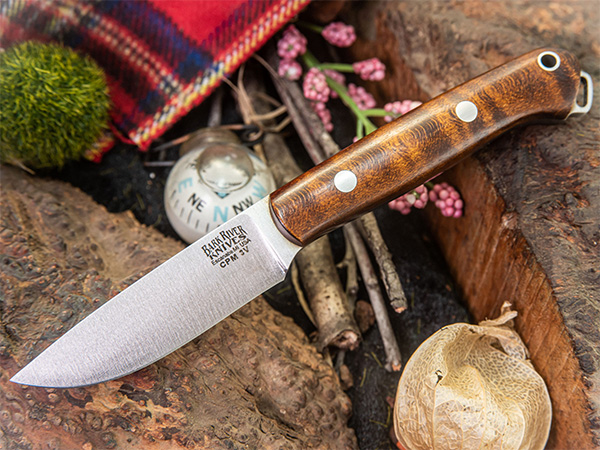
Escanaba, Michigan, March 20, 2026 — Bark River Knives (BRK), a renowned American cutlery manufacturer with 25 years of history, officially ceased operations this week. Founder Mike Stewart published a lengthy statement on Facebook, admitting to systematic mismanagement and steel fraud, bringing a dramatic end to a scandal that has shaken the outdoor knife industry.
Timeline of Events
Late 2024: Consumers began reporting anomalies on knife forums. Knives labeled as CPM MagnaCut stainless steel were exhibiting rust issues—a serious discrepancy given MagnaCut's high chromium content (17%-20%) and corrosion resistance properties
. Distributor DLT Trading had previously explained to customers that they suspected cross-contamination from grinding belts not being changed between processing high-carbon steels (A2, 3V) and MagnaCut blades.
March 20, 2026: Bark River Knives officially shut down. Employees received no advance notice, with some workers failing to receive their final paychecks on time.
March 23, 2026: Mike Stewart issued an official statement on Facebook, admitting that due to financial difficulties, the company had turned to purchasing knife blanks manufactured in China. Employees were instructed to remove "Made in China" labels, regrind and reshape the blades, and market them as "American-made" with steel designations of CPM-154 or 154CM—when in fact they were made from 9Cr18MoV (equivalent to 440C grade steel).
Affected Models: Camp Bolo, Fox River Skinner, Highwayman 4, Mini-Manitou, Gladstone Hunter, Bitterroot Caper, and two club-exclusive models produced after 2019.
Founder's Confession: A Belated Admission of Guilt
"This closing should have happened a long time ago—I should have done it two years ago," Stewart stated in his announcement. He accepted full responsibility, emphasizing that "the choice to use the substitute steel was my choice and not a mistake by anyone else," and stressing that distributors were completely unaware of the deception.
Stewart defended the substitution by claiming that testing showed the Chinese steel "had almost the exact same edge retention and toughness as CPM-154, and actually better corrosion resistance"
. He argued that with "five or more different operations" performed on the blanks, they "qualified as American-made"
. However, he conceded that "the steel was mislabeled".
Industry Shock: Trust Crisis for Dealers and Consumers
DLT Trading, a primary distributor, issued a statement confirming that three models sold through their platform—Fox River Trailing Point, Mini Manitou, and Camp Bolo—carried "deceptively labeled steel." They announced plans to send remaining inventory batches to Niagara Steel for independent verification
. DLT emphasized they learned of the issue simultaneously with the public, received no prior notification, and currently hold substantial BRK inventory.
The knife community reacted with outrage. A long-term employee revealed on forums that after domestic steel suppliers cut off credit due to unpaid bills, the company resorted to Chinese blanks to stay operational. Workers "felt absolutely terrible" being forced to remove labels but remained silent due to economic necessity. Industry insiders further noted this was not Stewart's first controversy, citing previous issues at Blackjack Knives and Marble Arms dating back to his 1987 entry into the industry.
Future Arrangements
Stewart announced his son Jim Stewart would launch an independent knife company and committed to honoring all warranty obligations for Bark River products. Stewart himself stated he would "fade into the sunset with deep regret from the knife industry that I have been involved in for 50 years".
Industry Reflection
This incident exposes systemic risks in supply chain transparency and quality verification within the high-end handmade knife sector. For collectors and outdoor enthusiasts, steel authenticity often remains unverifiable until real-world use, allowing fraud to persist undetected. The fall of Bark River Knives represents not merely the end of a company, but a severe blow to the credibility of the "American-made" label.