Gear Patrol's Sean Tirman, writing up the launch on November 2, landed on the right qualifier before anyone else could.
But don't let that last little tidbit fool you; this is still an exceptional, rarefied EDC knife.
The tidbit was price. At $400 the 213BK-2601 is the cheapest Kitsari yet, which says more about the first two than about this one. Benchmade's initial Kitsari arrived at the end of September in a run of 25 pieces with Fafnir Damasteel, and a second edition followed for members of the SPD collective. Neither was a knife you could simply order. This one is, at Benchmade and at Blade HQ, for the same $400.
What the third Kitsari changes
Steel moves from Fafnir Damasteel to Z-12Ultra, a powder-metallurgy tool steel in the same performance band as Erasteel ASP 2053, CPM 10V and Vanadis 8.
Blade length holds at 3.146 inches, and deployment stays manual on thumb studs.
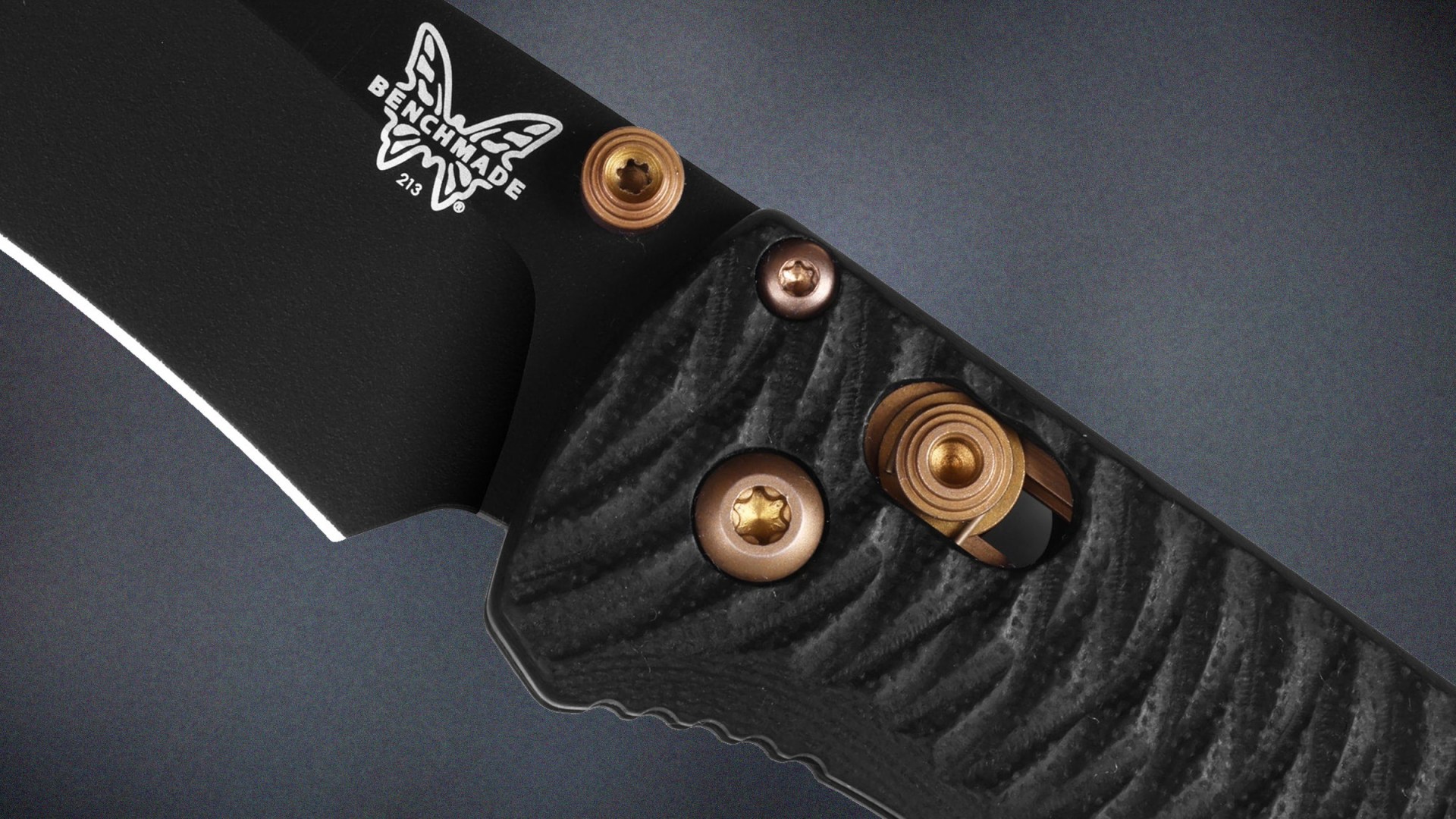
A Cerakote finish goes over the blade, both for wear resistance and for the blacked-out look the shape was asking for.
Hardware switches to Flat Dark Earth PVD, covering the lock bar, clip and pivot collars to match the thumb studs.
The swap is a real trade, not a cost cut dressed up as one. Damasteel is a pattern-welded stainless chosen for how it looks. Z-12Ultra is chosen for how it cuts and how long it keeps cutting. Tool steels in that vanadium-rich family give up stain resistance to get wear resistance, which is why Cerakote matters here beyond cosmetics: it puts a barrier between a hungry tool steel and whatever is in your pocket.
The first hawkbill in the catalog
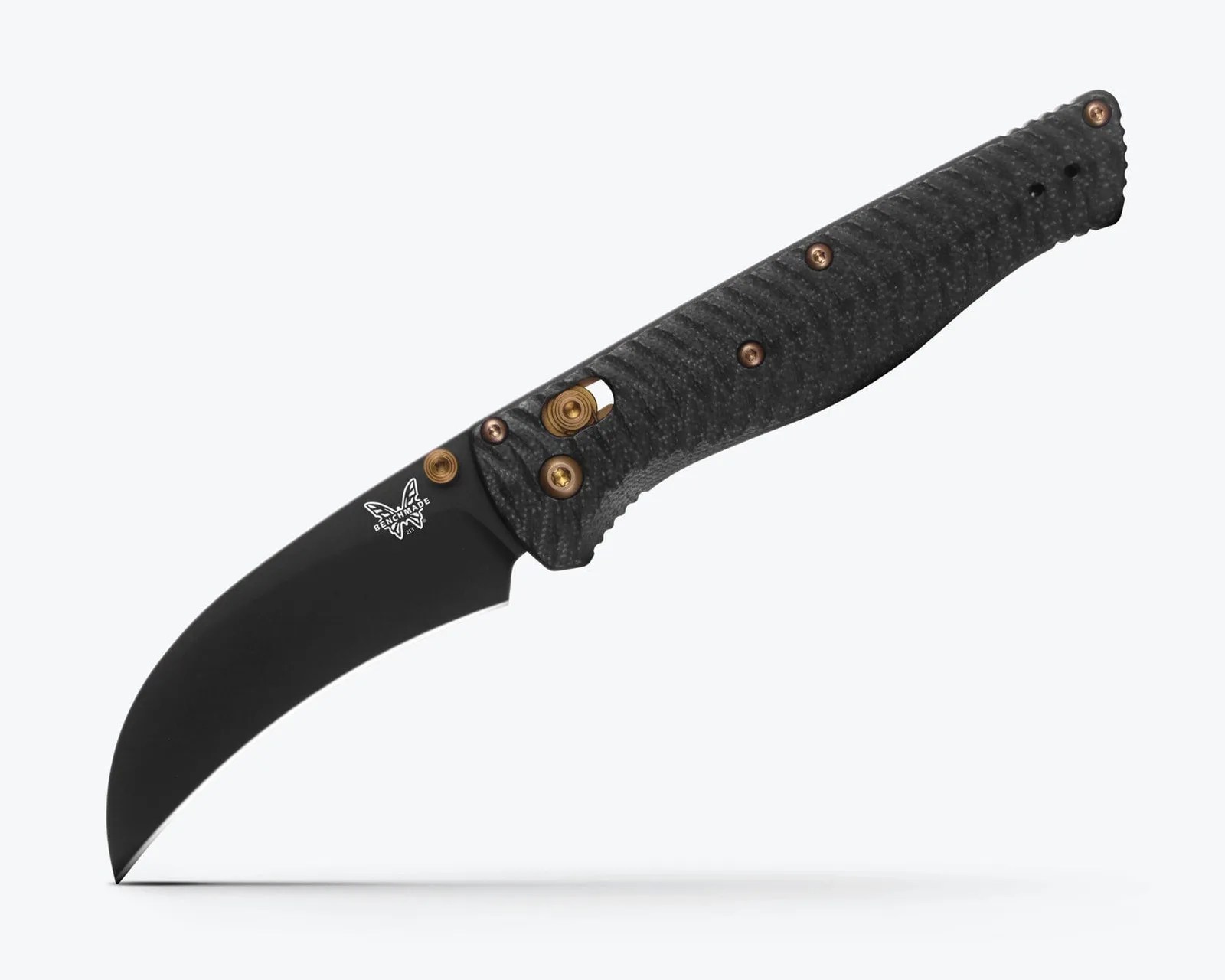
Benchmade has built drop points, tantos, sheepsfoot blades, and a fair number of recurves over the decades. It had never shipped a hawkbill before the Kitsari. The inward-curving edge pulls material into the cut instead of pushing it away, which is why the shape shows up on rope, seatbelt and vine work rather than on cardboard.
The curve is also where the kitsune reference lives. The blade's arc is meant to echo the tail of the nine-tailed fox from Japanese myth, and the black finish makes the silhouette read as one continuous line from pivot to tip.
Handle, lock, and the nine tails
The handle is G10, machined with grooves and laser-engraved texturing that stand in for fur. It is the sort of detail that photographs badly and feels obvious in hand. Inside sits the AXIS lock, Benchmade's crossbar mechanism and the design that first brought that layout to mass production.
At 3.146 inches of blade the knife is squarely in daily-carry territory, and the hawkbill's geometry means the cutting edge is longer than the blade length suggests. Deep finger grooves under the pivot put the hand close to the work, which is the whole point of the shape.
Where it sits against its siblings
The 25-piece Damasteel original is a collector object now, and priced like one on the secondary market.
The SPD collective edition was never publicly listed, so its numbers are hard to verify.
The 213BK-2601 is the version with a real price, a real listing, and a real return policy.
Buyers who want a folding slicer for cardboard and apples should look elsewhere. A hawkbill with a 3.146-inch blade and a $400 tag is a specialist tool with a collector's surcharge, and the limited run means the price will not soften once stock clears. Anyone who wants a general-purpose Benchmade at that budget has several better options, and anyone who does not already know why a hawkbill curves that way probably does not need this one.