A balisong turns end over end in a competitor's hand while a small crowd forms along the aisle. That was the scene at the West Coast Flipping Championships on the Saturday of BLADE Show West 2026, one of two headline events that gave the Salt Lake City weekend a shape beyond its exhibit tables.
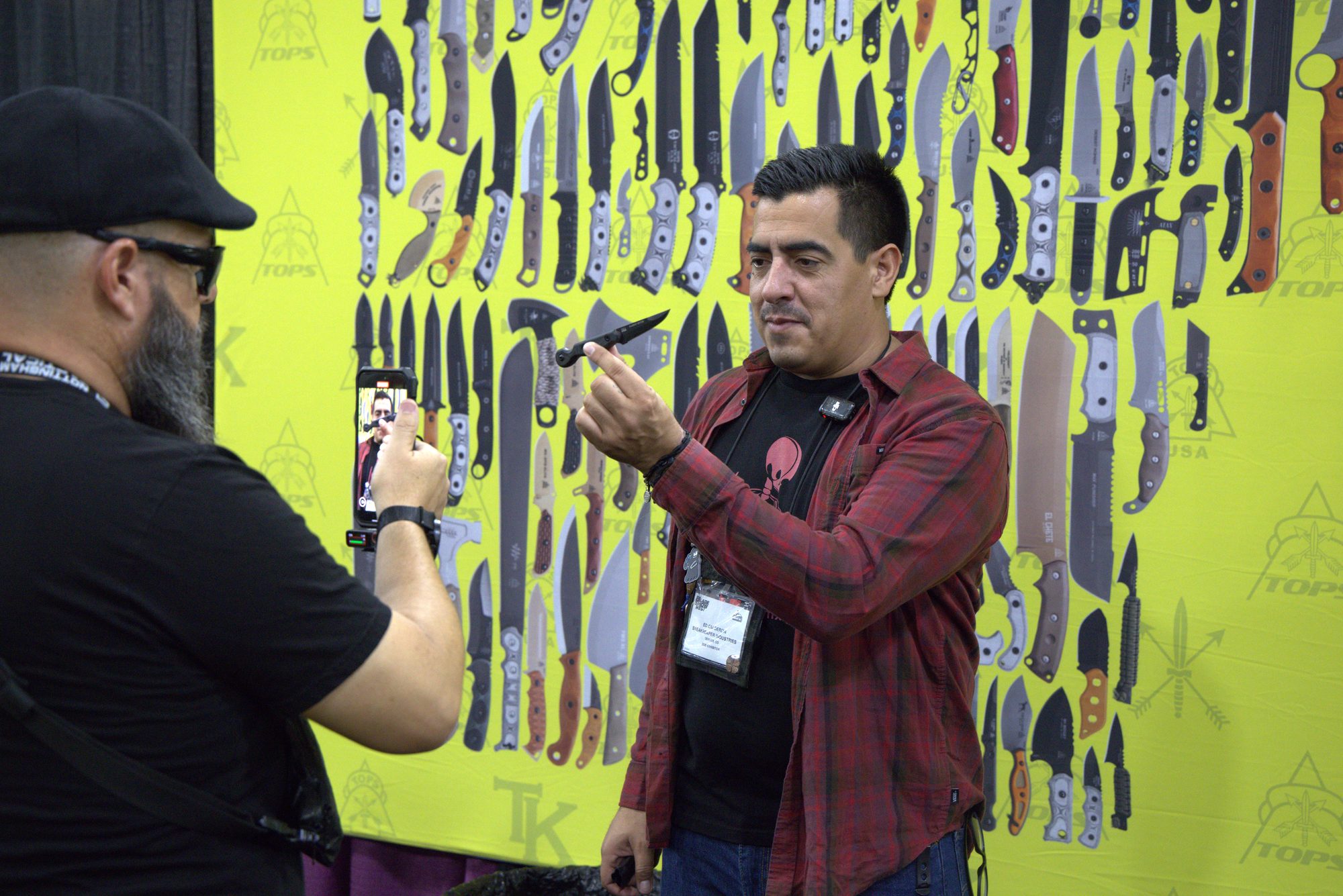
The flipping competition has a regional logic that a casual visitor might miss. Balisong culture in the United States grew up largely on the west coast, and the show's own coverage frames the event as a fitting use of the venue. A championship is not a sales pitch. It is a skill contest with an audience, and it draws people who might otherwise have come only to browse.
The other headline event was quieter but no less unusual. Bladesmith Lonnie Jensen forged a knife on the show floor during the weekend, working in front of attendees rather than behind a shop door. For most visitors a finished blade arrives under glass or on a table with a price tag. Watching one take shape from the forge connects the object back to the labor that produced it, and it is the kind of demonstration a photo gallery cannot replace.
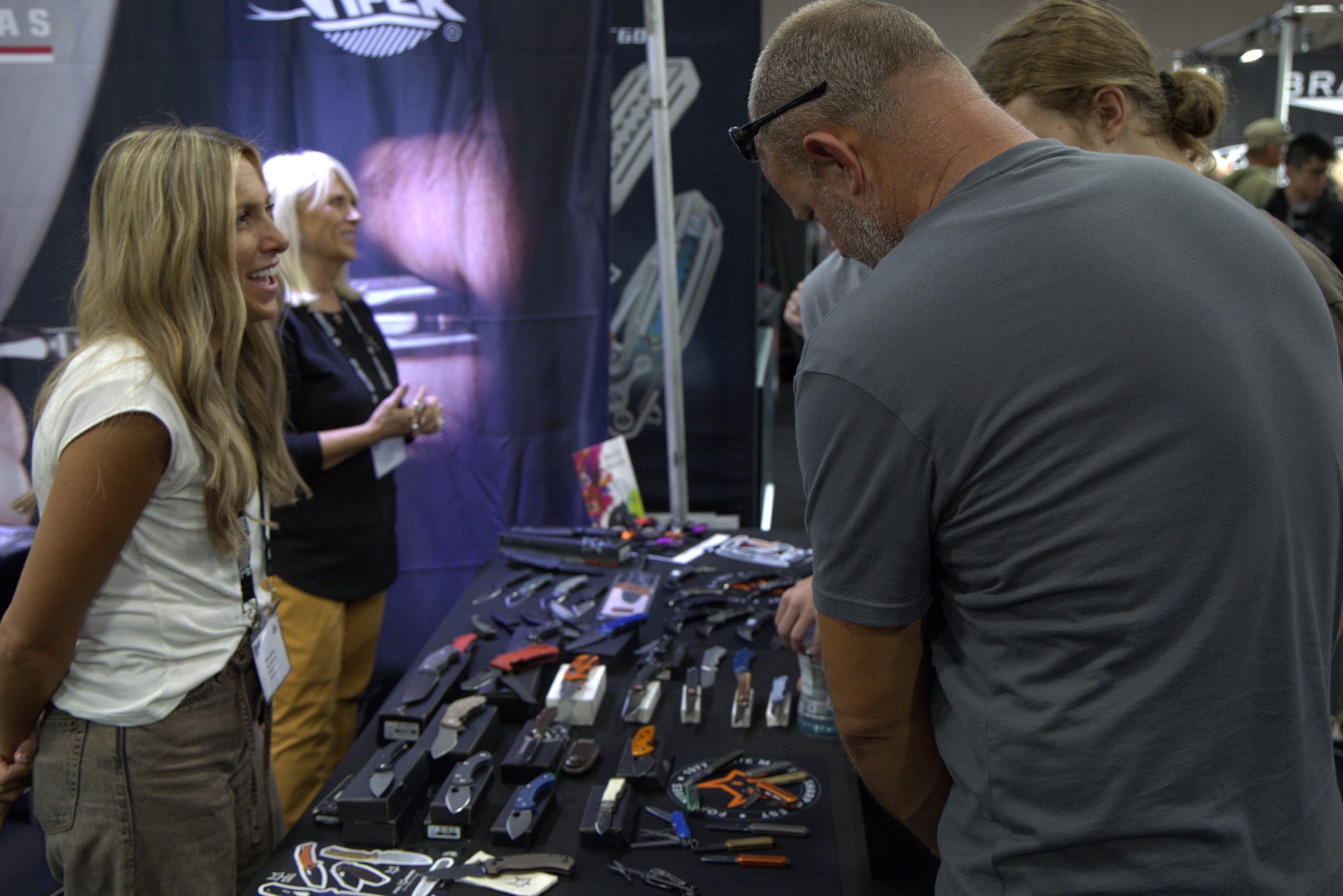
The BLADE Show West Awards ran alongside both, split between production and custom categories. That two-track structure mirrors how the wider knife market is divided: factory knives judged on tolerances, materials and consistent execution, custom work judged on the individual maker's hand. Holding both at a regional stop gives makers who do not travel to Atlanta a judging opportunity closer to home.
Free demonstrations and knifemaking classes fill out the program the organizer advertises, and the whole package answers a practical problem for any two-day show. A hall of 250-plus exhibitors can be walked in a morning. Scheduled events are what keep attendees in the building into the afternoon, and they give makers a reason to talk about technique instead of only price.
There is also a community function that is easy to undervalue. A flipping championship draws a younger, trick-oriented crowd; a forging demo draws people interested in craft; an awards ceremony draws the trade. Put them in one hall and those groups overlap for a weekend, which is how a regional show builds a following that outlasts any single exhibitor list.
A competition program also creates a different kind of record than a sales floor does. Winners of a flipping championship, an awards ceremony and a forging demonstration are remembered by name, while the contents of a booth are remembered by object. Over several editions those names become a local history, and a regional show can build an identity that a traveling trade exhibition never acquires. The western stop has already changed cities once, from Portland to Salt Lake City, and keeping the championships through that move is one way the organizer signals continuity. Attendees who return year to year come for the scheduled events as much as for the exhibitor list, which is exactly what a show needs if it intends to outgrow a single venue.
Whether the 2027 calendar keeps the same mix of competition and demonstration is not something the organizer has published. The western stop has already moved once, from Portland to Salt Lake City, and its programming has grown with each edition. The next question is not whether the flipping championship returns, but what the show adds beside it.