I make high quality replica Freddy gloves with brazed on sharpened blades. Would anyone be interested in one? That offer, posted to r/knives this week by user Fit_Share9666, is a small thread by the subreddit's standards, but it sits at a strange crossing point between prop collecting and real blade work that the knife community rarely discusses.
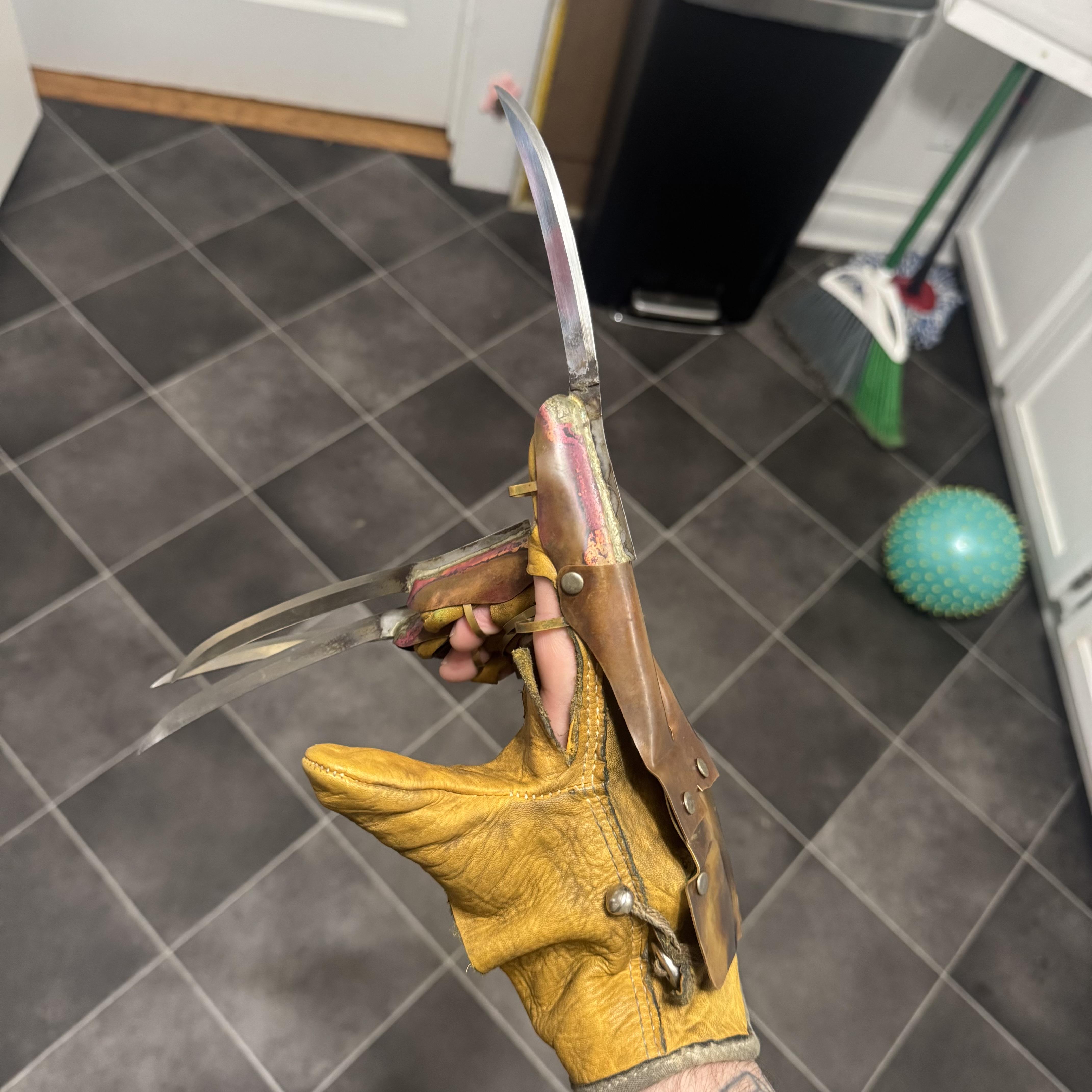
The original screen-used glove from A Nightmare on Elm Street is one of the most famous blade props in film history: four finger blades mounted on a copper backplate and finger stalls over a leather glove. The prop community has spent decades reverse-engineering it, and the accepted recipe is specific. Copper forms the armature, stainless steel forms the blades, and the two are joined with solder in joints that were deliberately messy, because the original was built in a workshop, not a factory. Guides for screen-accurate builds go as far as replicating the bent index-finger rivet from the hero glove.
What distinguishes this maker's offer is the brazing and the edges. Solder joins copper at lower temperatures with soft filler; brazing runs hotter and uses a brass-family filler alloy that flows into the joint and produces a stronger, more fused bond. Brazed joints survive handling and stress that would pop a solder joint, which matters if the blades are actually ground sharp and meant to be touched, flexed or tested rather than displayed behind glass.
Sharpened edges are where this diverges from the commercial market. Mass-market replicas, including the 1/1 scale glove NECA re-released in October 2026, ship with unsharpened metal blades mounted on faux leather, built for shelves. A glove with working edges is a different object with different liabilities, which is presumably why the maker framed the post as a question about interest rather than a product listing. A blade fixed to your own hand changes the safety calculus in ways no pocket knife does.
There is real knifemaking hiding in this niche regardless. Grinding curved finger blades, managing heat input on a copper joint, and getting consistent edge geometry on four matched blades is the same skill set used on small fixed blades. Prop builders who do this well are, functionally, bladesmiths working to a movie spec.
Worth watching: whether the thread turns into a run of commissions, and how the community handles the question of sharpened wearable blades. Prop legality varies by jurisdiction, and r/knives regulars tend to be blunt about that line. Either way, the post is a reminder that some of the most interesting blade work in the knife world never appears in a catalog.